Public Speaking:
Meaning, Types, Importance, and Essential Skills
What Is Public Speaking?
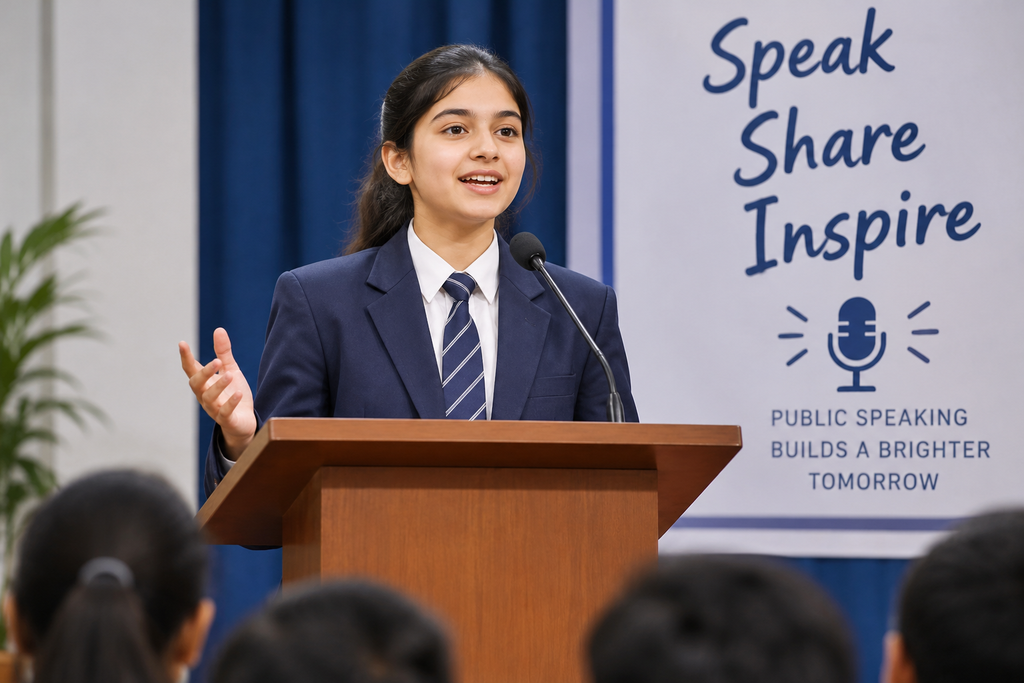
Public speaking is the art of expressing our thoughts, ideas, and opinions in front of an audience. It may involve speaking to a small group of people in a classroom or addressing hundreds of people at a public gathering. The purpose of public speaking is to share information, express ideas, persuade others, or inspire people through words.
We all speak in our daily lives, but speaking confidently in front of others is a different experience. Some people feel nervous when all eyes are on them, while others enjoy the opportunity to express themselves. The good news is that public speaking is not a talent reserved for a few people. With regular practice, patience, and the right guidance, anyone can become a better speaker.
What Are the Different Types of Public Speaking?
Public speaking takes different forms depending on the purpose of the speech and the audience. The main types include:
1. Informative Speaking: The purpose is to provide knowledge or explain a particular subject. Teachers, lecturers, and professionals often use this type of speaking to share information.
2. Persuasive Speaking: This involves convincing the audience to accept an idea, consider a different point of view, or take action. Political speeches and awareness campaigns are common examples.
3. Motivational Speaking: Motivational speakers inspire others to trust their abilities, face life’s challenges with courage, and keep moving forward to achieve their dreams.
4. Demonstrative Speaking: This type of speaking explains how to perform a task or complete a process. For example, demonstrating how to prepare a dish or use a particular device involves demonstrative speaking.
5. Special Occasion Speaking: These speeches are delivered at events such as weddings, farewell parties, award ceremonies, and birthday celebrations. They help express feelings, share memories, or honour someone.
Why Should We Learn Public Speaking?
Public speaking is a valuable life skill that can help us in our personal, academic, and professional lives. Learning to speak effectively offers several benefits.
– Builds confidence: Speaking in front of others gradually reduces fear and helps us trust our abilities.
– Improves communication: It teaches us to express our thoughts clearly so that others can understand us easily.
– Creates career opportunities: Good speaking skills are useful during interviews, meetings, presentations, and professional discussions.
– Develops leadership qualities: Leaders need to communicate their ideas, guide their teams, and inspire people to work towards common goals.
– Helps in academic life: Students who can speak confidently often find it easier to participate in discussions, deliver presentations, and take part in debates.
– Strengthens relationships: Expressing ourselves clearly and listening to others carefully can improve our interactions with people.
– Reduces stage fear: Regular practice helps us manage nervousness and become more comfortable speaking before an audience.
Public speaking involves much more than delivering a speech in front of an audience. It is about learning to communicate with confidence whenever an opportunity arises.
What Skills Should You Learn for Public Speaking?
Becoming a good public speaker requires more than knowing what to say. The way we deliver our message also matters. Here are some essential skills to develop.
1. Clear Communication: Use simple, meaningful words and arrange your ideas logically. Your audience should be able to understand your message without difficulty.
2. Confidence: Stand comfortably, speak with a steady voice, and trust the knowledge you have prepared. Remember that making a small mistake does not mean your speech has failed.
3. Body Language: Maintain a natural posture, use appropriate hand gestures, and avoid movements that distract your audience.
4. Eye Contact: Look at different members of the audience while speaking. This helps create a connection and makes your delivery feel more personal.
5. Voice Modulation: Change your tone, pace, and volume according to the message. A varied voice keeps listeners interested and helps emphasise important points.
6. Listening Skills: Good speakers are also good listeners. Understanding other people’s questions, opinions, and reactions helps you communicate more effectively.
7. Organisation of Ideas: Begin with an interesting introduction, explain your main points in a logical order, and finish with a meaningful conclusion.
8. Audience Awareness: Consider the age, interests, and understanding of your audience.
Use words and examples that your audience can easily understand and relate to.
9. Time Management: Practise your speech beforehand so that you can cover the important points within the allotted time.
10. Regular Practice: Practise in front of a mirror, record yourself, or speak before friends and family. Ask for honest feedback and work on improving one skill at a time.
Conclusion
With time and regular practice, anyone can become a better public speaker. Send the next one when you’re ready. With time and regular practice, anyone can become a better public speaker. Send the next one when you’re ready. What matters most is your willingness to learn, practise, and improve.
Start with small steps. Share your ideas in a group discussion, participate in a classroom activity, or practise speaking aloud for a few minutes every day. Gradually, you will learn to express yourself more clearly and handle nervousness more effectively.
Remember, a good public speaker is not someone who never feels nervous, but someone who learns to communicate despite that nervousness. With consistent effort, you can develop the confidence and skills needed to make your words meaningful and your voice heard.