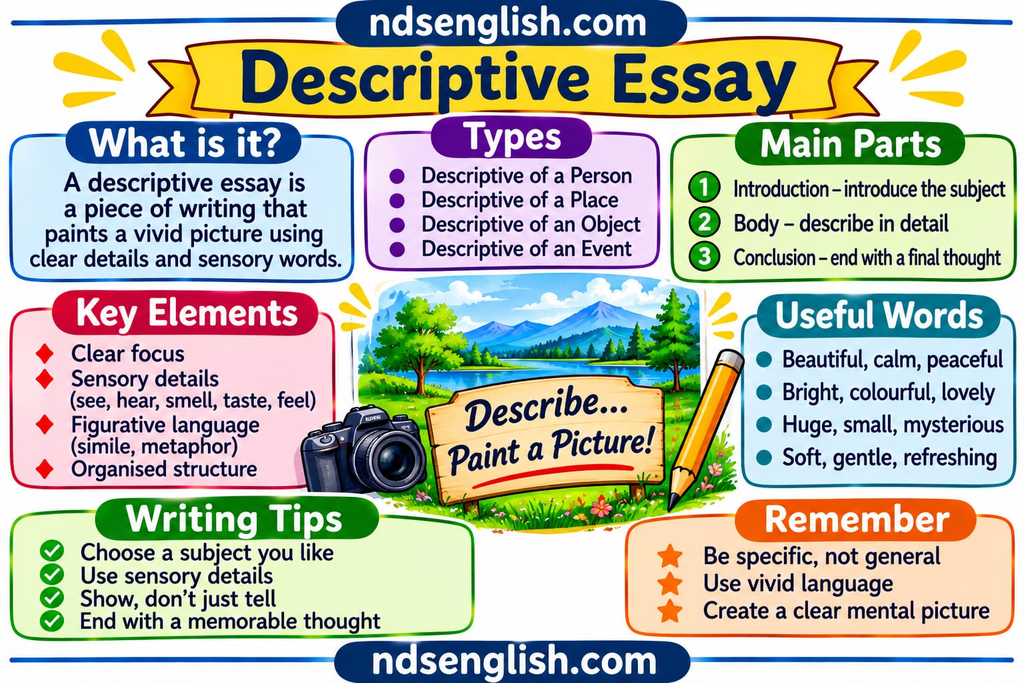
What is a Descriptive Essay?
A descriptive essay is a type of essay in which the writer describes a person, place, object, experience, or situation in detail to help the reader imagine it clearly.
The purpose of a descriptive essay is to create a vivid picture in the reader’s mind through carefully chosen words, sensory details, and descriptive language.
In simple words, a descriptive essay is like painting a picture with words.
For example, if the topic is A Beautiful Garden, the writer describes the garden’s colorful flowers, the fragrance of the plants, the sound of birds, and the gentle breeze to help the reader imagine being there.
Rules for Writing a Descriptive Essay at Three Levels
Descriptive essay writing should be taught progressively. Beginners learn to describe basic features, intermediate writers learn to create vivid descriptions, and advanced writers learn to create a deeper impression through sophisticated language and carefully organized details.
1. BEGINNER-LEVEL DESCRIPTIVE ESSAYS
A. Introduction: What Should We Include?
The introduction should introduce the person, place, object, or experience being described.
Rules to Follow:
- Begin by clearly introducing the topic.
- Write simple and meaningful sentences.
- Mention what you are describing.
- Give one or two general details about it.
- Avoid unnecessary information.
Example Topic: A Beautiful Garden
My favourite place is a lovely garden near my home. It is filled with colourful flowers and lush green plants.I love visiting the garden because it makes me feel happy.
B. Body Paragraphs: What Should We Include?
The body paragraphs should explain the key features of the topic in detail.
Rules to Follow:
- Describe what you can see.
- Include simple details about colors, shapes, sizes, and appearances.
- Use sensory details related to sight, sound, smell, touch, and, where appropriate, taste.
- Use simple adjectives such as beautiful, colorful, soft, fresh, and bright.
- Write complete sentences.
- Arrange the details in a logical order.
- Avoid repeating the same words and ideas.
- Stay focused on the topic.
Example:
The garden has red roses, yellow sunflowers, and pink lilies. Tall trees provide shade, and green grass covers the ground. I can hear birds chirping in the trees. The flowers smell sweet, and a cool breeze makes the garden pleasant.
C. Conclusion: What Should We Include?
The conclusion should end the essay by expressing a final thought or feeling about the topic.
Rules to Follow:
- Summarize the overall impression.
- Express a simple personal feeling or opinion.
- Avoid introducing new descriptive details.
- End with a complete and meaningful sentence.
Example:
I love spending time in this garden because it is peaceful and beautiful. It is one of my favorite places to relax.
Important Rules for Beginner-Level Writers
- Use simple vocabulary.
- Write short, clear sentences.
- Use appropriate adjectives.
- Include basic sensory details.
- Structure the essay into three main parts: an introduction, a body, and a conclusion.
- Check spelling, punctuation, and capitalization.
- Avoid writing unrelated information.
Main Goal: To describe a subject clearly using simple sentences and relevant details.
2. INTERMEDIATE-LEVEL DESCRIPTIVE ESSAYS
At this level, students should move beyond simply naming features. They should learn to create a vivid picture through specific details, varied vocabulary, and well-organized paragraphs.
A. Introduction: What Should We Include?
The introduction should introduce the subject and establish the overall impression the writer wants to create.
Rules to Follow:
- Begin with an engaging opening sentence.
- Introduce the subject clearly.
- Establish the mood or atmosphere.
- Give the reader an idea of what makes the subject interesting or special.
- Avoid explaining every detail in the introduction.
Example Topic: A Beautiful Garden
Hidden behind a row of tall trees, the garden is a peaceful escape from the noise of the city. Its colorful flowers, winding pathways, and refreshing fragrance make it a delightful place to visit.
B. Body Paragraphs: What Should We Include?
The body should develop the description through specific details and carefully chosen language.
Rules to Follow:
- Organize the description into paragraphs according to different features or aspects.
- Use all five senses where relevant.
- Choose precise adjectives and descriptive verbs.
- Include similes and metaphors where appropriate.
- Describe the atmosphere and mood.
- Vary sentence beginnings and sentence lengths.
- Use transitions to connect ideas smoothly.
- Avoid excessive repetition.
- Maintain a consistent focus on the subject.
- Include personal observations when they strengthen the description.
Example:
The garden bursts with color as roses bloom beside delicate lilies and cheerful sunflowers. Their petals sway gently in the breeze, while droplets of water sparkle like tiny diamonds on the leaves. The sweet fragrance of the flowers fills the air. Nearby, birds sing from the branches, creating a soothing melody that blends with the rustling of leaves.
Notice the use of a simile: “droplets of water sparkle like tiny diamonds.”
This comparison makes the description more vivid.
C. Conclusion: What Should We Include?
The conclusion should reinforce the overall impression created by the essay.
Rules to Follow:
- Summarize the main impression without repeating the introduction word for word.
- Explain why the subject is memorable, interesting, or meaningful.
- Express a thoughtful personal response when appropriate.
- End with a memorable sentence.
- Avoid adding a completely new descriptive aspect.
Example:
For me, the garden is more than a collection of flowers and trees. It is a peaceful retreat where I can forget my worries and appreciate the simple beauty of nature.
Important Rules for Intermediate-Level Writers
- Use precise and varied vocabulary.
- Include sensory details that help readers imagine the scene.
- Use similes, metaphors, and personification appropriately.
- Develop each paragraph around a clear descriptive focus.
- Vary sentence structures.
- Maintain a logical flow between paragraphs.
- Create a consistent mood or atmosphere.
- Avoid turning the essay into an unrelated narrative.
Main Goal: To create a vivid, engaging, and well-organized description.
3. ADVANCED-LEVEL DESCRIPTIVE ESSAYS
At this level, students should develop a distinctive descriptive style. Their writing should go beyond listing physical features to create an atmosphere, evoke emotions, and communicate a deeper impression.
A. Introduction: What Should Students Include?
The introduction should establish the subject, tone, and overall impression through purposeful language.
Rules to Follow:
- Begin with a compelling opening.
- Introduce the subject naturally rather than relying on a generic opening.
- Establish the mood or atmosphere.
- Use precise and evocative vocabulary.
- Suggest the significance of the subject when relevant.
- Avoid clichés, excessive adjectives, and unnecessary background information.
Example Topic: A Beautiful Garden
At dawn, the garden awakens beneath a veil of silver mist. Soft sunlight filters through the branches, illuminating dew-covered petals and transforming the familiar landscape into a quiet world of color, fragrance, and delicate movement.
B. Body Paragraphs: What Should We Include?
The body paragraphs should create a layered and immersive description.
Rules to Follow:
- Use precise vocabulary: Select words that communicate exact details rather than relying on general adjectives.
- Develop sensory imagery: Integrate sight, sound, smell, touch, and taste when relevant and natural.
- Use figurative language purposefully: Employ similes, metaphors, personification, and other literary devices when they strengthen the description.
- Control the atmosphere: Create a consistent mood, such as peacefulness, mystery, excitement, or melancholy.
- Vary sentence structures: Combine short, emphatic sentences with longer, flowing ones.
- Organize details deliberately: Move through the setting spatially, focus on significant details, or shift from broad impressions to close observations.
- Use selective description: Emphasize details that contribute to the intended impression rather than describing everything equally.
- Develop a distinctive perspective: Show what makes the subject meaningful or unusual.
- Use transitions naturally: Maintain coherence without making every connection obvious or repetitive.
- Balance description and reflection: Include thoughts or emotions when they deepen the reader’s understanding.
- Avoid overwriting: Do not overload sentences with adjectives, metaphors, or elaborate expressions.
- Maintain a Descriptive Focus: Ensure every paragraph supports the overall impression you want to create.
Example:
Beyond the stone pathway, the garden unfolds in a quiet abundance of color. Crimson roses rise above clusters of pale lilies, their petals trembling beneath the weight of the morning dew.Sunlight filters through the branches above, casting golden patches across the grass. Somewhere among the trees, a bird calls, its clear note briefly interrupting the stillness. The air carries the faint sweetness of wet earth and blooming jasmine, while the cool breeze brushes against the skin. For a moment, the hurried world beyond the garden seems impossibly distant.
Notice how this description combines precise details, sensory imagery, varied sentence structures, and atmosphere.
C. Conclusion: What Should We Include?
The conclusion should create a memorable impression on the reader.
Rules to Follow:
- Reinforce the central atmosphere or impression.
- Connect the description to a meaningful thought or emotion when appropriate.
- Avoid merely listing the features already described.
- Use controlled, precise language.
- End with a memorable image, reflection, or observation.
- Avoid exaggerated or forced emotional statements.
Example:
As the morning light grows stronger, the garden gradually loses its veil of mist, yet its quiet charm remains. It reminds me that beauty does not always demand attention; sometimes, it reveals itself in the smallest details to those willing to pause and notice.
Important Rules for Advanced-Level Writers
- Use precise, expressive vocabulary.
- Create layered sensory imagery.
- Employ literary devices with restraint and purpose.
- Control tone, mood, and pacing.
- Vary sentence structure and rhythm.
- Organize details to guide the reader’s attention.
- Develop an original perspective.
- Balance concrete description with reflection.
- Eliminate clichés, redundancy, and unnecessary details.
- Edit carefully for grammar, punctuation, coherence, and stylistic consistency.
Main Goal: To create a vivid, original, and memorable descriptive experience for the reader.