Deepawali
Introduction
Deepawali, widely known as Diwali, is one of the most celebrated festivals in India. Popularly recognised as the Festival of Lights, it symbolises the victory of good over evil, knowledge over ignorance, and hope over despair. Celebrated with great enthusiasm and devotion, Deepawali brings people together and creates an atmosphere of happiness, gratitude, and togetherness.
The festival takes place during the Hindu month of Kartika, which usually falls in October or November. Although its religious significance varies among different communities, the central message remains closely associated with positivity, righteousness, prosperity, and the beginning of a new chapter in life.
Deepawali is not merely a religious occasion. It is also an important part of India’s cultural heritage. From beautifully decorated homes and illuminated streets to traditional sweets and family gatherings, every aspect of the celebration reflects the country’s rich customs and traditions.
The History and Religious Significance of Deepawali
Deepawali has several historical and religious associations that have been preserved through generations. One of the most popular stories is connected with the return of Lord Rama to Ayodhya after fourteen years of exile.
According to the Hindu epic Ramayana, Lord Rama, accompanied by his wife Goddess Sita and his younger brother Lakshmana, returned to Ayodhya after defeating Ravana, the king of Lanka. His victory represented the triumph of righteousness over wrongdoing.
The people of Ayodhya were delighted by the return of their beloved prince. To welcome him, they illuminated their homes and streets with rows of earthen lamps. This tradition is believed to be one of the origins of lighting diyas during Deepawali.
Another important religious association is the worship of Goddess Lakshmi, who represents wealth, prosperity, and good fortune. Devotees offer prayers to seek her blessings for financial stability, happiness, and well-being.
Deepawali also holds considerable significance in Jainism and Sikhism. In Jain tradition, the festival commemorates the attainment of nirvana by Lord Mahavira. For Sikhs, the occasion is associated with Bandi Chhor Divas, which celebrates the release of Guru Hargobind Ji from imprisonment.
These different traditions demonstrate that Deepawali has a wide cultural and spiritual significance that extends beyond a single religious narrative.
Preparations Before Deepawali
Preparations for Deepawali usually begin several days before the actual festival. People clean their homes, organise household belongings, decorate their surroundings, and purchase new clothes and festive items.
Cleaning is traditionally considered an important part of the celebration. It symbolises the removal of negativity and the preparation of a fresh and welcoming environment. Many families also repaint or renovate parts of their homes before the festival.
Markets become particularly lively during this period. Shops display colourful decorations, traditional clothing, sweets, jewellery, earthen lamps, and gift items. People visit markets to purchase everything required for the celebrations.
Shopping is not simply a commercial activity during Deepawali. It is also a way for families to participate in the festive atmosphere and prepare collectively for the occasion.
Traditional Decorations and the Beauty of Diyas
One of the most attractive features of Deepawali is the decoration of homes with traditional and modern decorative items.
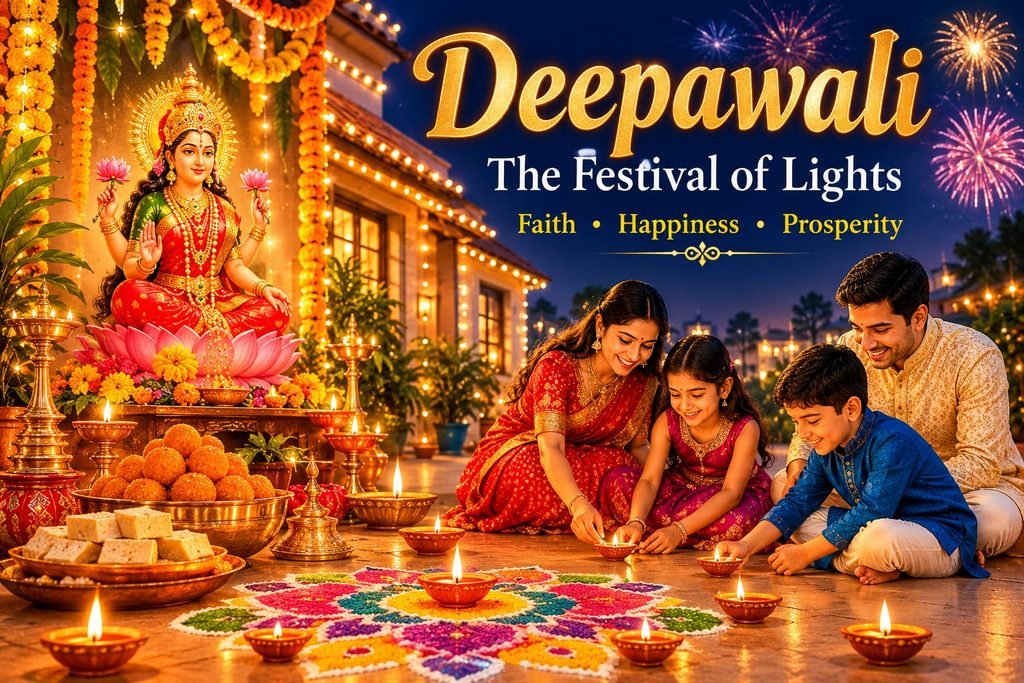
Earthen lamps, commonly known as diyas, are among the most recognisable symbols of the festival. These small lamps are traditionally filled with oil or ghee and fitted with cotton wicks. When illuminated, they create a peaceful and welcoming atmosphere.
People place diyas near entrances, windows, balconies, courtyards, and places of worship. Their gentle light represents hope, wisdom, and the removal of darkness.
Rangoli is another popular decorative tradition. Colourful patterns are created on floors, particularly near the entrances of homes. These designs may include geometric patterns, flowers, traditional symbols, and artistic representations of religious themes.
Some families use coloured powders, while others decorate their rangoli with flower petals, rice, and other natural materials.
In addition to traditional decorations, people use electric lights, lanterns, candles, and decorative strings to illuminate their homes. The combination of these decorations gives streets and neighbourhoods a distinctive festive appearance.
Lakshmi Puja and Religious Observances
Lakshmi Puja is one of the most important religious activities associated with Deepawali. Families prepare a clean and decorated place for worship and arrange flowers, sweets, fruits, and other traditional offerings.
Devotees worship Goddess Lakshmi and seek blessings for prosperity, peace, and happiness. In many households, Lord Ganesha is also worshipped along with Goddess Lakshmi because he is traditionally associated with wisdom and the removal of obstacles.
The evening prayer is generally performed after sunset. Family members gather together, light diyas, offer prayers, and participate in religious rituals.
For many people, this occasion is also an opportunity to express gratitude for the blessings they have received throughout the year and to seek strength for the challenges ahead.
Traditional Food and Festive Delicacies
Food is an essential part of Deepawali celebrations. Families prepare a variety of traditional sweets and savoury dishes to welcome guests and share the happiness of the festival.
Popular sweets include laddoos, barfi, gulab jamun, kaju katli, rasgulla, and peda. Different regions of India have their own traditional delicacies, making the festival particularly interesting from a culinary perspective.
Savoury snacks such as namak pare, chakli, samosas, kachoris, and mixtures are also commonly prepared.
In many households, family members participate in preparing festive dishes. Recipes are passed down through generations, allowing traditional culinary practices to remain an important part of family heritage.
Exchanging sweets with relatives, friends, and neighbours is another cherished custom. It represents affection, goodwill, and the desire to share happiness with others.
The Five Days of Deepawali
Deepawali is traditionally celebrated over five days. Each day has a distinct religious and cultural significance.
1. Dhanteras
Dhanteras marks the beginning of the five-day celebration. The day is associated with wealth, health, and prosperity. Many families purchase utensils, gold, silver, or other household items as part of the traditional observance.
2. Naraka Chaturdashi
Also known as Chhoti Diwali, Naraka Chaturdashi is associated with the victory of Lord Krishna over the demon Narakasura in certain Hindu traditions. It represents the destruction of evil and the restoration of righteousness.
3. Lakshmi Puja
Lakshmi Puja is the principal day of Deepawali celebrations. Families illuminate their homes with diyas, worship Goddess Lakshmi and Lord Ganesha, exchange gifts, and enjoy festive meals together.
4. Govardhan Puja
Govardhan Puja commemorates the association of Lord Krishna with Govardhan Hill. According to Hindu tradition, Lord Krishna lifted the hill to protect the people of Vrindavan from severe rainfall. The occasion also reflects gratitude towards nature and the importance of protecting the environment.
5. Bhai Dooj
Bhai Dooj marks the conclusion of the traditional five-day celebration. It celebrates the affectionate relationship between brothers and sisters. Sisters traditionally perform rituals and pray for their brothers’ well-being, while brothers express their love and appreciation.
The names, customs, and manner of observing these days may differ across different parts of India.
Regional Variations in Deepawali Celebrations
India is a country of remarkable cultural diversity, and Deepawali is celebrated in different ways across its regions.
In northern India, the festival is strongly associated with Lord Rama’s return to Ayodhya. Homes and streets are illuminated, and families participate in Lakshmi Puja.
In western India, particularly in Gujarat, Deepawali has special significance because it is associated with prosperity, business activities, and the beginning of a new financial year for many business communities.
In eastern India, especially in West Bengal, Odisha, and Assam, Kali Puja is an important religious observance during the Deepawali period. Devotees pray to Goddess Kali, seeking her blessings for strength and protection.
In southern India, Naraka Chaturdashi is particularly significant in several communities. Celebrations often include traditional oil baths, prayers, new clothes, and festive meals.
These regional differences make Deepawali an excellent example of how a festival can maintain its central message while embracing different cultural traditions.
The Social and Cultural Importance of Deepawali
Deepawali plays an important role in strengthening family relationships and encouraging social interaction. People who live far away often make special efforts to visit their families during the festival.
Relatives gather, exchange gifts, share meals, and spend quality time together. Children particularly enjoy the decorations, sweets, new clothes, and festive activities.
The festival also supports local businesses and traditional occupations. Potters, artisans, flower sellers, sweet makers, clothing retailers, and small shopkeepers experience increased demand during the festive season.
Purchasing locally produced decorations, earthen lamps, and handmade gifts can help support these traditional occupations and encourage small businesses.
Furthermore, Deepawali promotes generosity and compassion. Many individuals and organisations distribute food, clothing, and essential supplies to people who need assistance. Such activities remind us that festivals become more meaningful when happiness is shared with everyone.
Celebrating an Eco-Friendly Deepawali
While Deepawali is an occasion of happiness, its celebrations should also reflect concern for the environment.
Excessive use of firecrackers can increase air and noise pollution. This may create difficulties for children, older people, individuals with respiratory sensitivities, and animals.
An environmentally responsible celebration encourages people to reduce unnecessary pollution and adopt sustainable practices.
Some simple measures include:
- Using traditional earthen diyas instead of excessive disposable decorations.
- Avoiding noisy firecrackers.
- Choosing reusable and environmentally responsible decorative materials.
- Reducing plastic packaging and unnecessary waste.
- Supporting local artisans and small businesses.
- Sharing food, clothes, and useful items with underprivileged families.
These practices demonstrate that a meaningful celebration does not depend on excessive consumption or elaborate displays. It can be equally joyful when observed with simplicity, consideration, and responsibility.
The Deeper Message of Deepawali
Beyond its religious ceremonies and colourful celebrations, Deepawali carries a message that remains relevant in everyday life.
The lighting of a lamp can be understood as a symbol of personal growth and awareness. Just as a small flame illuminates a dark room, knowledge and understanding can help individuals overcome confusion and make better decisions.
The festival encourages people to practise honesty, kindness, patience, and forgiveness. It reminds us that success and prosperity are valuable, but they become truly meaningful when accompanied by compassion and responsibility.
Deepawali also provides an opportunity to reflect on personal goals, relationships, and achievements. It encourages individuals to leave behind unnecessary negativity and welcome new opportunities with confidence and determination.
The message of the festival is therefore not limited to a particular day or religious occasion. It can guide our behaviour throughout the year.
Conclusion
Deepawali is much more than a festival of lights, sweets, decorations, and family gatherings. It represents India’s rich cultural heritage, religious traditions, and enduring values of goodness, generosity, and togetherness.
Although different communities celebrate the occasion according to their own customs and beliefs, its central message remains universal: goodness should prevail, knowledge should overcome ignorance, and hope should continue even during difficult times.
As we celebrate Deepawali, let us make an effort to spread happiness, strengthen our relationships, respect our traditions, and care for the environment.
Ultimately, the true brightness of Deepawali lies not only in the lamps that illuminate our homes but also in the kindness, wisdom, and compassion that illuminate our lives.